
Heart rate variability is not the same as heart rate. Where a pulse count beats per minute describes how fast the heart is going, variability measures the tiny differences in time between consecutive beats. Those differences reflect the balance between the sympathetic branch of the nervous system, which drives the body toward alertness and effort, and the parasympathetic branch, which restores calm and digestion. High variability, in broad terms, is associated with resilience; low variability often tracks with stress, illness, poor sleep or heavy training load.
Because HRV shifts with almost every demand the body faces, it is rarely useful as a single snapshot. One reading taken after a stressful meeting, a large coffee or a late night tells almost nothing on its own. What is informative is the personal trend: how this week’s average compares with last week’s, and how it moves in response to sleep, alcohol, travel and training. Over a few weeks of consistent tracking, an individual’s baseline becomes clear, and departures from that baseline become meaningful signals. Comparing one person’s HRV to another’s is largely pointless; the metric only makes sense against its own history.
A number of common factors depress HRV in predictable ways. Alcohol near bedtime, intense exercise late in the day, elevated work stress and a string of short nights all tend to pull the overnight average downward. Conversely, consistent aerobic training, regular bedtimes, warm recovery walks and adequate protein intake often lift it slowly over weeks. The interesting part is not any one factor on its own, but how the wearer’s own body responds: some people tolerate a late evening run well, others see it reflected as lower variability the next morning. The device cannot make those judgements for the wearer, but it can make the patterns visible.
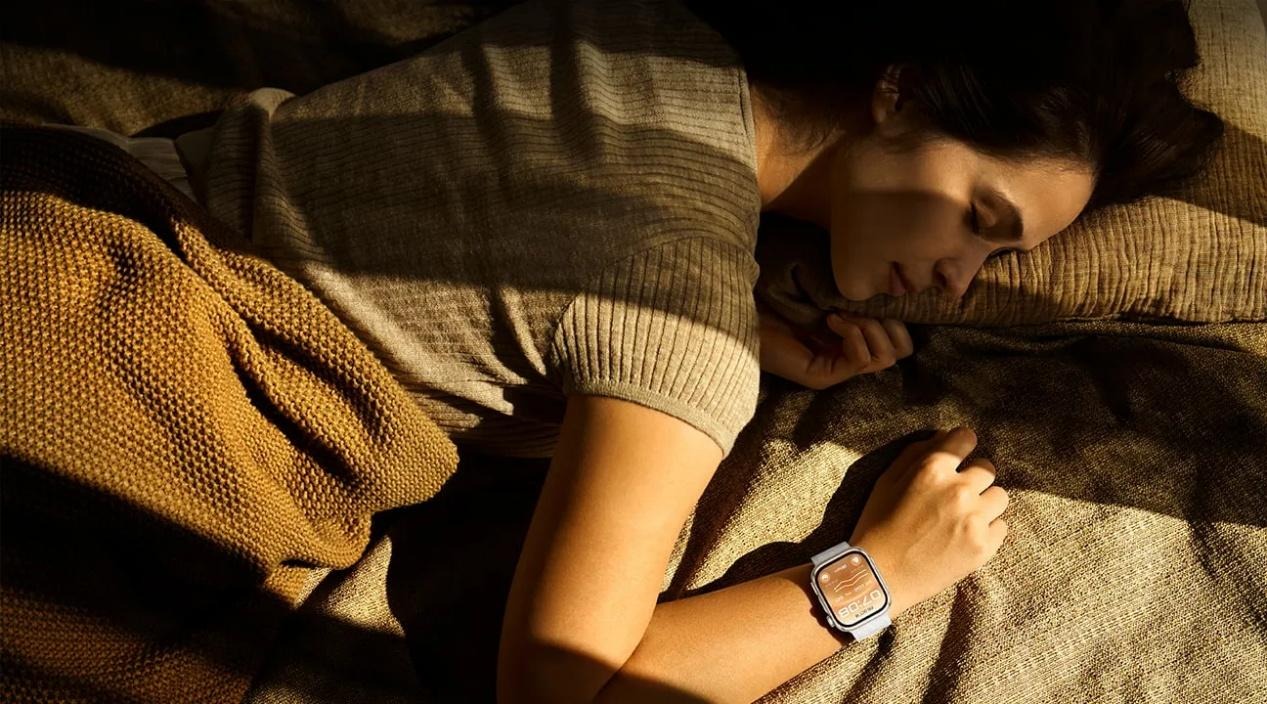
A modern heart rate monitor watch captures HRV overnight, when the body is at rest and least influenced by external distractions. Combined with sleep-stage detection that distinguishes deep sleep, light sleep and rapid eye movement, the overnight record offers a compact summary of how restorative the night actually was. On mornings when HRV sits below the personal baseline and deep sleep is short, a lighter training day is usually the wisest choice. When the opposite pattern appears, a harder session is more likely to feel good. Many wearers come to rely on this morning read as a practical bridge between raw biometrics and the question everyone asks upon waking: how do I feel today?
The same data can be paired with on-demand blood pressure measurement to build a wider picture. Because stress and poor recovery influence both autonomic balance and vascular tone, watching HRV and blood pressure move together helps distinguish a one-off reading from a genuine pattern. For a deeper look at how exercise and pressure readings interact across the day, a clinician-led exploration of measurement timing and context is a useful companion to wrist-based HRV trends.
The aim is never to optimise a number for its own sake. HRV is a compass, not a destination. Used calmly and over long horizons, it encourages the kind of attention to recovery that ambitious training programmes too often overlook, and it turns the vague feeling of being run down into something specific enough to act on. Over months, the wearer develops an intuitive sense of which of their own habits are genuinely restorative and which are quietly depleting — and that self-knowledge is the real reward.
It is worth remembering that HRV varies substantially between individuals, shaped by age, genetics, fitness level and even sex. Comparing one’s own number to a chart or to a friend’s is largely meaningless; the only baseline that matters is the wearer’s own, built over several weeks of ordinary life. A lower average in a younger runner is not automatically healthier than a higher average in an older adult, and vice versa. The trend within the individual is the useful signal.
Lifestyle factors that depress HRV are worth knowing about, because they are the ones most often under personal control. Alcohol within three hours of bed reliably lowers overnight variability, as does a heavy late dinner. A room that is too warm, a stressful phone call late in the evening, and a long screen session before sleep all leave their mark. Over weeks of tracking, wearers often make small adjustments — an earlier dinner, a short reading period instead of scrolling — that show up as a gentle rise in their personal baseline.
When HRV drops unexpectedly without an obvious cause, it is often the body’s quiet way of signalling an oncoming illness. A day or two of lower variability ahead of a cold is common, and respecting that signal by taking an easier day can shorten the recovery. The watch does not diagnose anything, but it gives the wearer a small advantage: the chance to rest proactively rather than pushing through and then being forced to rest.
Heart rate variability rewards patience. It is a metric that only makes sense after a few weeks of personal baseline, and it repays that patience by offering a daily, internal weather report on stress, sleep and recovery. For anyone willing to observe themselves calmly over time, it is one of the most insightful signals on the modern wrist.










Leave a Reply